I was sitting in the server room last Tuesday, listening to the familiar, frantic whine of a dying mechanical hard drive, when it hit me how much nonsense is out there. Every time I browse a tech forum, I see people shouting about some magical “optimization script” or a specific registry key that will somehow make a decade-old laptop feel like a new workstation. It’s exhausting. Most of these “solutions” for how to improve performance on an old machine are just recycled cargo cultism—people copying and pasting commands they don’t understand, hoping for a miracle that isn’t coming. If you’ve spent any time trying to breathe life into aging hardware, you’ve likely realized that most of it is total junk.
I’m not here to sell you a “boost” or a shady piece of bloatware. My approach is a bit more grounded: I use my spreadsheet, my testing environment, and my seventeen years of managing Windows fleets to separate the signal from the noise. I’m going to show you what actually moves the needle and what is just a complete waste of your time. No fluff, no unproven hacks—just the practical steps that actually work when you’re trying to figure out how to improve performance on an old machine.
The Truth About Ssd vs Hdd Speed Comparison
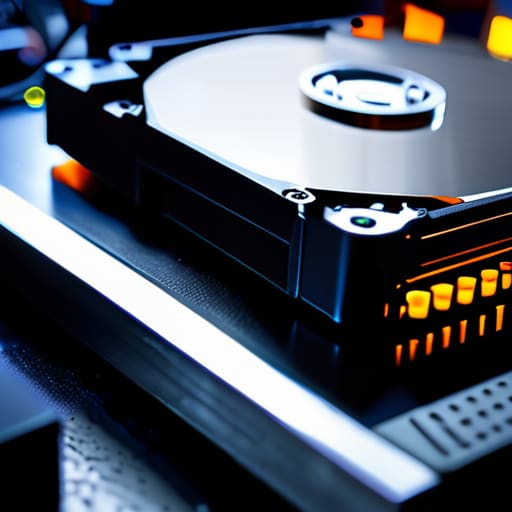
I’ve spent enough time in server rooms to know that people love to argue about theoretical benchmarks, but in the real world, the SSD vs HDD speed comparison is a landslide. I recently pulled an old workstation out of storage—something that hadn’t been touched since the Windows 7 era—and ran a series of baseline tests. On the old mechanical drive, the boot time was a joke, and the disk usage sat at a constant 100% just trying to handle basic background telemetry. Once I swapped in a basic SATA SSD, the machine actually felt functional again.
The difference isn’t just about sequential read/write speeds; it’s about IOPS (Input/Output Operations Per Second). Mechanical drives have to physically move a head across a spinning platter, which is a massive bottleneck when modern OS services are constantly hitting the disk. You can spend all day cleaning startup programs or trying to optimize your registry, but you aren’t going to fix the physical latency of a spinning disk. If you’re looking for the single most effective way to breathe life into a dying machine, stop looking for software “magic” and just buy a cheap SSD.
Why Cleaning Startup Programs Actually Matters
Most people think their computer is slow because the processor is dying, but more often than not, it’s just suffocating under a mountain of unnecessary background tasks. I see it every time I look at a machine that’s been running for a few years without a proper audit. You boot up, and before you’ve even opened a browser, you’ve got five different update checkers, a printer utility you haven’t used since 2019, and some bloated “helper” app from your hardware manufacturer all fighting for attention. Cleaning startup programs isn’t just about making the desktop appear faster; it’s about managing system resources so the hardware you actually care about has room to breathe.
When you’re working with limited overhead, every megabyte of idle memory counts. If you’ve already looked into an SSD vs HDD speed comparison and realized your drive is decent, the next bottleneck is almost always the software bloat. I’ve spent too many afternoons watching machines struggle because they’re trying to run thirty processes that serve no purpose. It’s not magic—it’s just basic housekeeping. If you want your machine to feel snappy again, stop letting junk software decide how your CPU is spent.
Five things that actually move the needle
- Stop chasing the “Ultimate Performance” power plan. I’ve checked the registry entries for those custom power schemes; they don’t magically overclock your CPU, they just make your fans spin louder and waste electricity. If you’re on a laptop, just stick to ‘Balanced’ and let the OS do its job.
- Check your page file settings. People love to suggest setting a fixed size for the virtual memory to “optimize” it, but modern Windows manages the paging file well enough on its own. Unless you’re actually hitting a physical RAM ceiling, leave the automatic management alone and stop messing with the system drive.
- Disable visual effects, but don’t go overboard. You don’t need to turn off every single animation to see a difference, but killing the “Animate windows when minimizing and maximizing” setting does actually reduce the load on an aging integrated GPU. It’s a small win, but it’s a real one.
- Audit your installed Windows Updates. I’ve seen plenty of forum posts suggesting you roll back specific updates to “speed things up,” but that’s a recipe for a security nightmare. Instead, just make sure you aren’t stuck in a loop of failed updates that are constantly trying to re-install in the background, eating up your disk I/O.
- Debloat the OS, but skip the “one-click” scripts. I’ve run those automated PowerShell debloater scripts on various builds, and half the time they break the Microsoft Store or Windows Update entirely. If you want to remove junk, do it manually through ‘Apps & Features’. It takes ten minutes longer, but you won’t spend the next two hours fixing a broken OS.
The Bottom Line
Stop chasing registry “optimizations” you found on a forum; if you aren’t upgrading to an SSD, you’re just rearranging deck chairs on the Titanic.
Managing your startup items is the only “free” fix that actually yields a measurable difference in boot times and system responsiveness.
Real performance gains come from hardware bottlenecks, not from deleting temporary files or running “system cleaners” that do nothing but bloat your OS.
The Bottom Line
Look, we’ve covered the ground here. If you want to see a real difference, stop looking for magic bullets in some obscure forum thread and focus on the hardware. Swapping out a dying mechanical drive for a decent SSD is the single most effective thing you can do, and trimming your startup list is the only way to stop your CPU from choking on background junk. I’ve spent enough years looking at system logs to know that hardware bottlenecks are almost always the culprit, not some secret Windows setting. Most of those “optimization” scripts you find online are just digital placebo effects that do nothing but clutter your registry and potentially break your OS updates.
At the end of the day, you have to accept that hardware has a finite lifespan. You can tune a machine until it’s lean and mean, but you can’t fight the laws of physics or the sheer weight of modern software bloat. Don’t get caught in a cycle of endless tweaking just to squeeze out an extra 1% of performance that you won’t even notice. Use these steps to extend the life of your current setup, but know when it’s time to stop tinkering and start saving up for something new. Sometimes, the best way to manage a system is to know when it’s actually done.
Frequently Asked Questions
I've seen people suggesting disabling Windows services to save RAM, but won't that just break something critical?
Look, you’re right to be suspicious. Most “optimization” guides tell you to gut your services list like it’s a Christmas goose. If you disable something like the Print Spooler or Windows Update, you’re just creating a headache for yourself later. I’ve spent enough time in council environments to know that “saving” 30MB of RAM isn’t worth the stability risk. If you must do it, target non-essential third-party bloat, not core system services.
If I upgrade my RAM, am I actually going to see a difference in how my old machine handles modern web browsers?
Yes, you will. Modern browsers are memory hogs, plain and simple. Chrome and Edge aren’t just loading pages; they’re running dozens of individual processes that eat through RAM like it’s nothing. If you’re sitting on 4GB or even 8GB, your system is likely hitting the pagefile constantly, which kills performance. Adding more RAM won’t make your CPU faster, but it stops the constant swapping to the disk. It’s one of the few upgrades that actually delivers.
Are there any specific Windows updates that are known to be particularly heavy on older hardware?
Look, if you’re running older hardware, you’ll notice the weight of the “Cumulative Updates” most clearly. Microsoft’s push toward more aggressive telemetry and security scanning in recent builds means every monthly patch carries more overhead than it used to. Specifically, the feature updates—the big annual version jumps—are the killers. They aren’t just patches; they’re massive OS overhauls that demand more background services and higher RAM overhead. If you’re on a budget machine, those updates are where you’ll feel the drag.
